
The importance of predictable velocity
Why velocity swings between sprints and how to make commitments predictable: five practical fixes for planning, capacity and dependencies.

Predictable velocity is the ability to know, in advance, how much work a team will complete in a given period, based on its availability.
The problem of varying velocity
When velocity varies between sprints, planning a release becomes difficult. No one knows when the work will be delivered, and the whole Scrum process breaks down. Chaos takes over, which does little for team morale.
Varying velocity usually happens because team members try to do their best and commit to more than they can deliver. In a collaborative environment with a well-set-up development process, there is more to a task than straightforward implementation. Some team members get lucky and land on tasks that are relatively simple to implement, while others run into a problem nobody anticipated. In one sprint, velocity looks high because the team is finishing carry-overs; in the next, it drops because new carry-overs appear.
Carry-overs create the impression that the team is underperforming: it could do more, but something unpredictable always gets in the way. Management notices the problem, sees the missed deadlines and tension builds among team members.
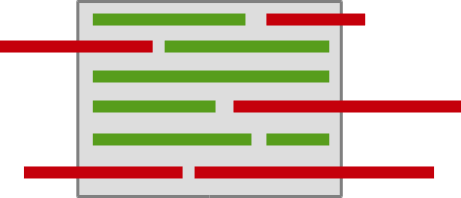
Regular sprint with carry-overs
The common problems in maintaining predictability
The problems vary by project, but many are common to all types of projects. Here are the usual ones, with practical fixes.
Expect the unexpected
Some tasks need research before they can start. Imagine a feature that depends on a third-party company that may not respond when you need it. Or a feature that cannot be implemented as planned because the team misunderstood the underlying technology when creating the task.
If such a task is added to a sprint without the necessary research, it is likely to take longer than expected, and the estimate will be blamed. Some would argue that you need a spike to research the subject first. But how do you know which tasks need one?
The only way is to start working on a task in advance. Starting before a task is planned makes it possible to find issues before they occur. With that approach, a task enters a sprint only when it is clear and some of the work is already done.
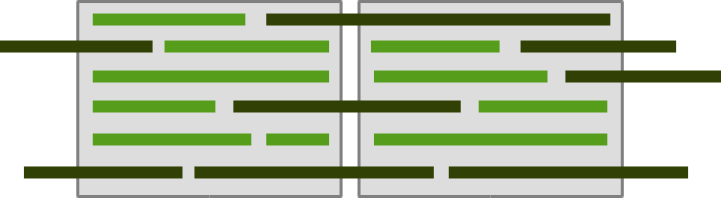
Sprints with tasks started in advance
Avoid fuzzy task definitions
Some tasks look acceptable to their creator but omit important details. Some implementation details can seriously affect delivery.
Business stakeholders may argue that task definitions should contain no technical detail, yet implementers often find the business requirements too vague to act on.
The solution is a technical design document that the implementation task references. That makes it clear what exactly needs to be built.
It also helps to include technical details in the task description, so implementers know what needs to be done and can spot potential issues early.
Reduce capacity using the Fibonacci sequence
Sometimes team members take vacation, or a public holiday falls within the sprint. Training and internal events also reduce availability: the time the team can spend on project work. In that case, capacity must be reduced to reflect the missing people.
Velocity is assumed to be constant, but it is calculated from the average velocity of everyone in the team. For simplicity, assume one person completes one story point per day. If one person is missing for one day, reduce the sprint's capacity by one story point. If two people are missing for two days (four story points), reduce capacity by five story points (the next Fibonacci number) rather than four. If two people are missing for three days, reduce capacity by eight points rather than six, to account for dependency risk.
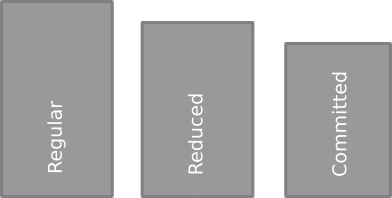
Committing less capacity than calculated
Avoid dependent tasks
Often, one person completes a task that another team member's task depends on. This creates in-team or inter-team dependencies. If the first task is late, every dependent task slips. Team members idle, then rush once the dependency clears, wasting valuable time.
Dependent tasks can start earlier, so that by the next sprint the critical upstream tasks are almost complete. That reduces the dependency's impact on velocity in the current sprint.
Estimate honestly
Estimating tasks honestly is difficult and requires the whole team's attention. Everyone should estimate without being influenced by other members' estimates. Only honest estimates show how long an epic will really take and keep release dates realistic.
Predictable velocity is not a tool or a metric you impose on a team; it is the result of removing surprises one by one. Start with the five fixes above, and the release date stops being a guess.
Related articles
- Managing sprint dependencies with chained pull requestsDependent tickets stall a sprint while people wait. Learn how stacked pull requests keep work moving and reduce idle time.
- Comparison metrics for agile teamsMetrics should create equal ground, not a leaderboard. Four comparison metrics that motivate agile teams without punishing them.
- Sheepherding story pointsOpen votes let the first estimate anchor the room. See how the sheep effect skews story points and how to run planning poker honestly.
About AELBOX
AELBOX is the team behind Scrumpy Planning Poker for Jira. We write about agile estimation, sprint planning and delivery.